
|
How do secular humanists deny the first words of the Bible, "In the beginning God"? How do they also deny the first commandment? |
God is over all. He has proclaimed His will in His Word, the Bible. All persons are to conduct themselves according to, and will be judged by, its infallible, eternal, absolute moral standards. God and His Word are one; His truth being followed by all would produce a morally-strong and unified society.
Secular humanism, however, presents an opposing model. This can be pictured as follows:
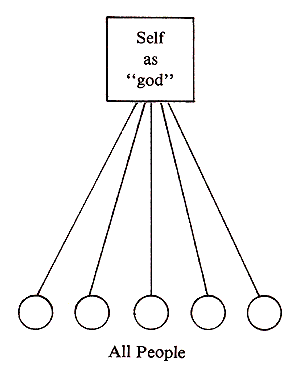
Secular humanism places the individual self as "god." As god, the individual is to determine his own standards of morality, that which is right or wrong according to his judgment. The individual is to be true to himself, to follow his own will and word. The individual is to judge according to his own thoughts and feelings. As "god," he asks himself, "How will this affect me?" "Is this what I want?" "Is this pleasing to me?"
Our natural, fallen, sinful heart has rebelled against God and continues to desire to be its own "god." Therefore secular humanism strongly and naturally appeals to fallen man. To man's self-centered, sinful heart, humanism proclaims that which appealing to him.
When put into actual practice, however, the humanistic model

