Jesus said unto him, Thou shalt love the Lord thy God with all thy heart, and with all thy soul, and with all thy mind,
This is the first and great commandment.
And the second is like unto it, Thou shalt love thy neighbour as thyself.
On these two commandments hang all the law and the prophets.
- Matthew 22:37-40

|
All ten commandments require love. Why is the breaking of one commandment actually a transgression of all ten? |
We believe the Protestant division of the Ten Commandments to be the most accurate biblically, for the following reasons:
1. It maintains as commandments only those that are clearly worded as commands.
2. It retains the marked difference between believing in false gods and worshipping through the use of images.
3. It preserves the commandment against covetousness as one command, as supported by Exodus 20: 17, Romans 7:7, and Romans 13:9.
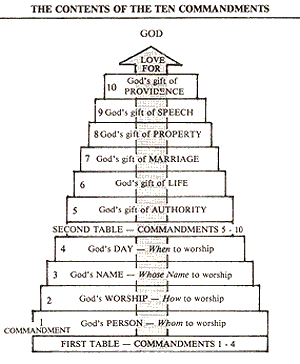
God's moral law is divided into two tables. The first table includes Commandments One through Four which emphasize our need to love God through directly worshipping Him. The second table contains Commandments Five through Ten which emphasizes our need to reveal love to God through showing love and concern for others. The core teaching contained in each commandment described in the sketch below and the chart on the following page.