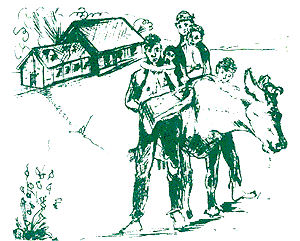
A very wealthy European landowner was so touched by the ignorance and poverty of the plantation slaves he observed in the Southern United States, that he left his great wealth behind and enlisted himself as a poor slave in order to help them.
Daily he bore the heat of the sun, the pains from heavy labor, the poverty of clothing, the scarcity of food, the filthiness of lodging, and the abuse of masters. He willingly bore all the humiliation of slavery in order to teach his fellow slaves how to read, write, and secure their independence.
When thinking of this man's voluntary humiliation to save others from slavery and bondage, are we not deeply moved by the depth of his love?
Christ's voluntary humiliation is far deeper than this man's. In what ways is this true?
If any slave would have rejected the wealthy landowner's deliverance, his rejection would have been both foolish and insulting. Why? What does this teach us con- cerning the rejection of the gospel call - Christ's offer of grace?
2. His being born into very humble, poverty-filled surroundings - He was born from a poverty parent - Mary; in poverty lodgings - a barn; wrapped in poverty clothing - swaddling clothes; and laid in a poverty cradle - a feeding trough for animals.

|
The incarnation of Christ speaks of the gracious love of the triune God - not only of Jesus. How does the incarnation reveal the rich love of each Person in the Godhead: |
|
|
What rich comforting truth of the love of God toward sinners is missed by those who deny Jesus' incarnation? |

